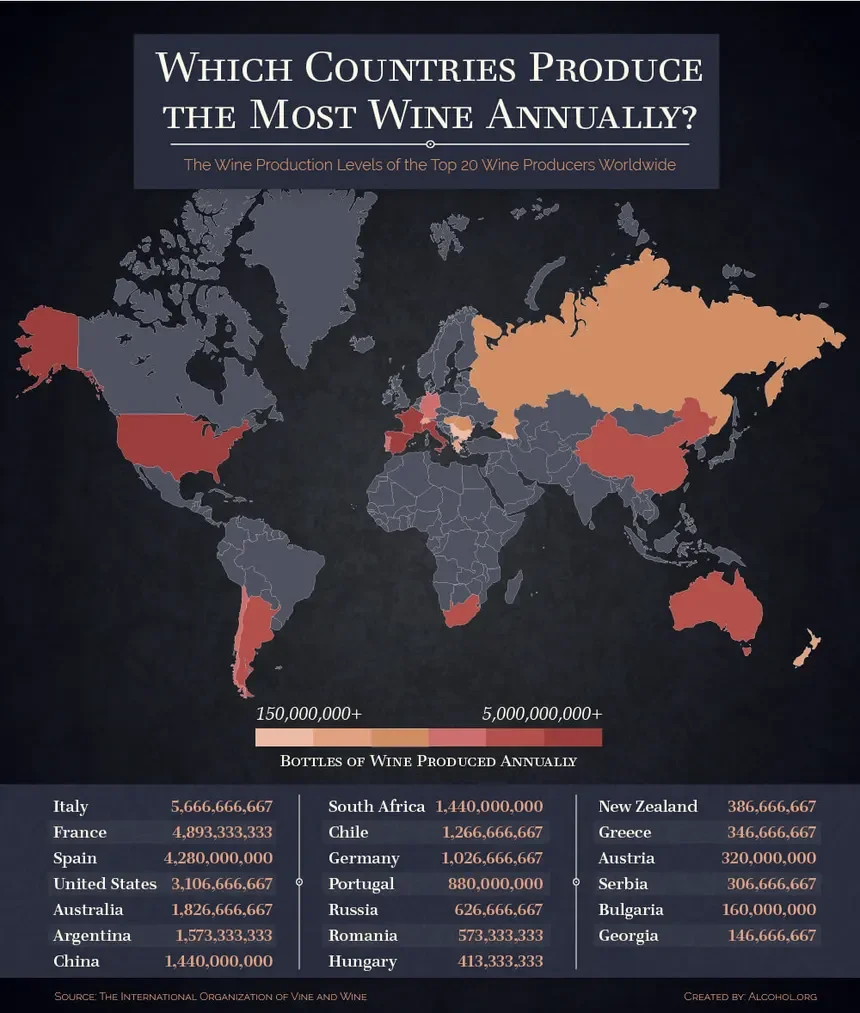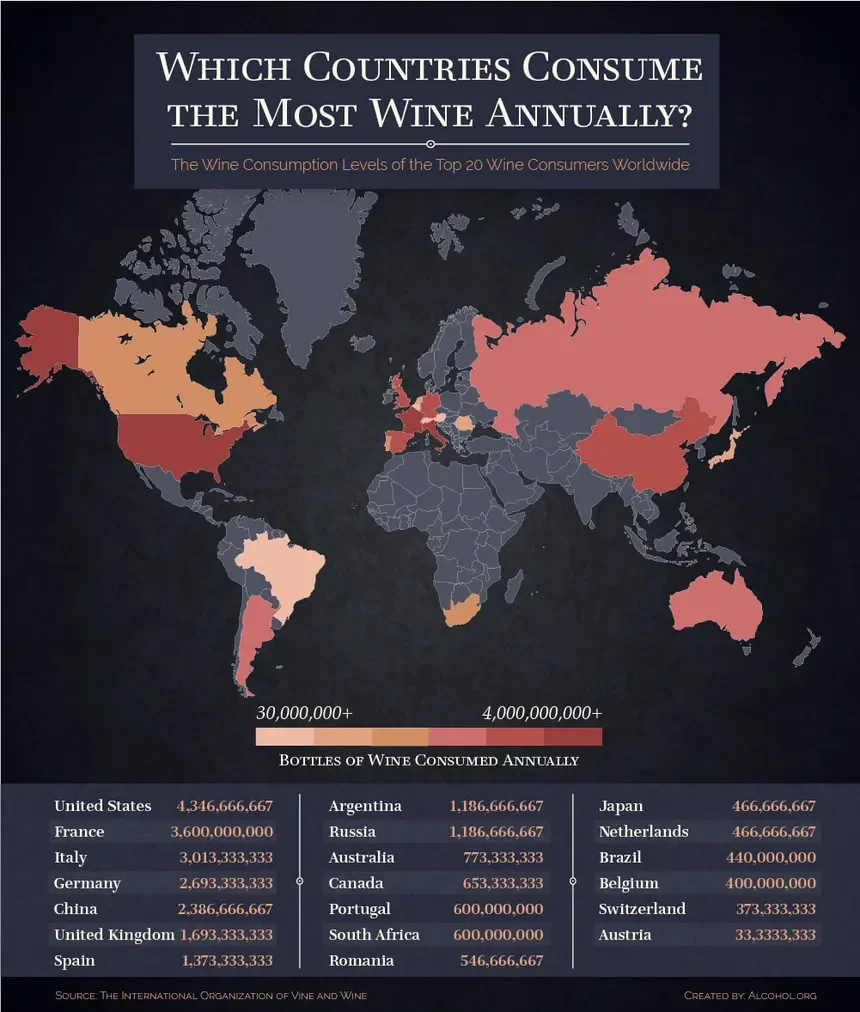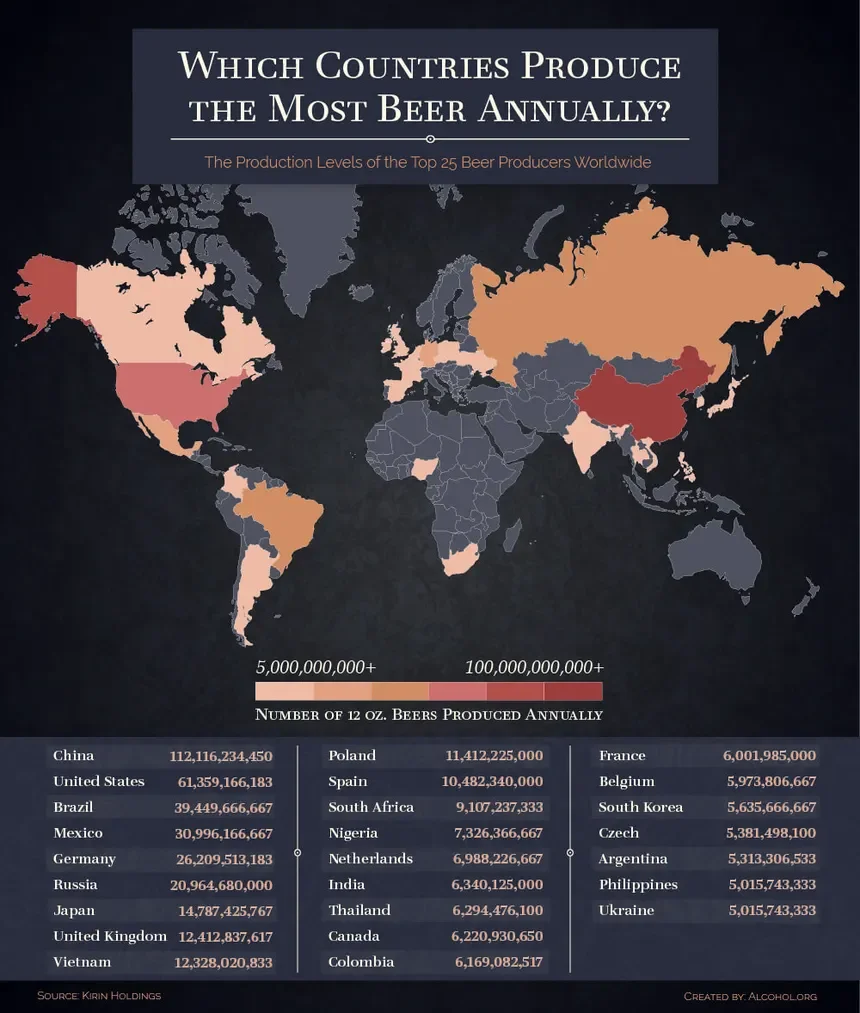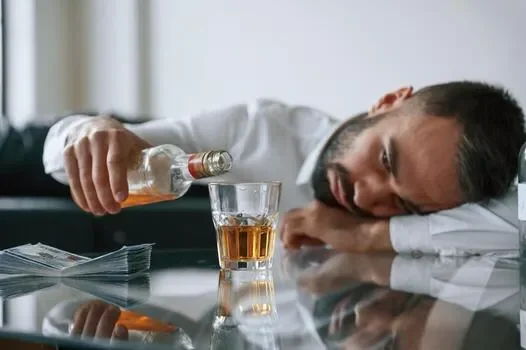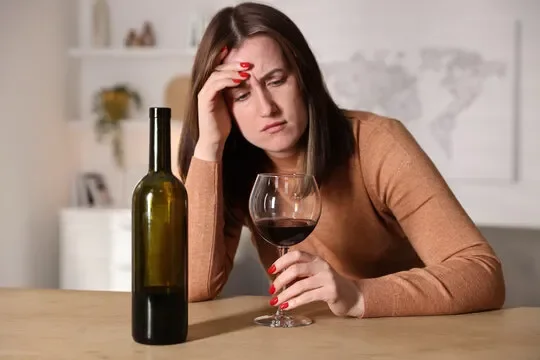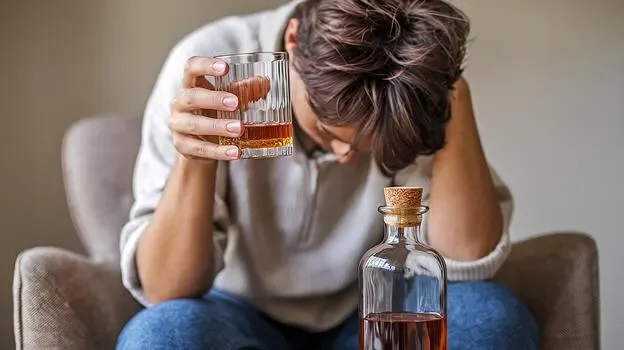

Did you know in some northern regions people have a monthly alcohol use quotas? To prevent excessive drinking and to manage consumption levels in the Northern community. Metal to Water Pattern.
I honestly I think Svalbard has the most logic alcohol use law. In the current society and situation you can not fully trust people. And due to loneliness factor in our social media fame craze driven society more and more people becoming addicted, to all kinds of substances. I would prefer to live in the country with monthly alcohol use and sales quota. Less drunk driving, less domestic violence accidents, less personal and emotional tragedies.
For permanent residents of mainland Norway, there is no monthly purchase quota for alcohol; however, sales are restricted by time and strength. Beer and cider with 2.5% to 4.7% alcohol by volume can be purchased in grocery stores until 20:00 on weekdays and 18:00 on Saturdays (or 18:00 the day before a holiday). Beverages above 4.7% alcohol must be purchased at Vinmonopolet or licensed restaurants, with store hours varying by location.
In contrast, Svalbard has strict monthly purchase quotas for residents entered in the Population Register. Eligible residents (aged 18 or 20, depending on the beverage) may purchase per month:
Up to 2 bottles of spirits (or up to 4 bottles of strong wine).
Up to 0.5 bottle of fortified wine (or one bottle every two months).
Up to 24 cans or half bottles of beer.
Unlimited Light wine for reasonable consumption.
Temporary residents in Svalbard (staying more than 30 days but not in the Population Register) may apply for a special permit from the Governor of Svalbard, which grants a monthly quota based on the length of stay.
Saudi Arabia: Following the lifting of a 73-year ban in 2025, the kingdom implemented a points-based monthly quota system allowing wealthy, non-Muslim foreign residents to purchase alcohol in Riyadh. The system is described as generous, permitting dozens of liters of spirits per month, with additional discounts for diplomats.
While other countries have strict limits on the amount of alcohol that can be brought into the country tax-free (such as Norway, where individuals can bring up to 4 liters of spirits if declared and taxed, or 1 liter tax-free), these are customs allowances rather than a legal monthly consumption quota for purchasing alcohol within the country. Most other nations regulate alcohol through Blood Alcohol Content (BAC) limits for driving or general health guidelines rather than a specific monthly purchase quota.
Yakutsk and the Republic of Sakha (Yakutia) do not have a monthly alcohol quota for individual consumers. Instead, the region enforces strict time-based restrictions on alcohol sales to combat high rates of alcoholism and related crime.
Sales Hours: The sale of spirits and beer is generally restricted to 2 p.m. to 8 p.m. in many parts of the republic, including Yakutsk, though specific local ordinances may vary.
Temporary Bans: During the COVID-19 pandemic in 2020, Yakutsk authorities imposed a total ban on alcohol sales to curb domestic violence and public health risks.
Sober Villages: Over 200 villages in Yakutia have declared themselves "sober," completely banning the sale of alcohol within their boundaries, a status achieved through local referendums or council resolutions.
Enforcement: The massive size of Yakutia, spanning three time zones, makes enforcement challenging, leading to issues with surrogate alcohol and illegal sales in remote areas.
Whys is it so difficult for any society to go through the economic cleansing process and reviewing historical events and facts of alcohol mafia, crime and addictions arising as a pattern? Think many centuries ago, what caused the most fights, economical uprising and instability of capital: illegal alcohol sales. Many dishonest businesses strive and prey on addicts, or people of the lesser mental capacity. The story of Pyotr Kharitonov and wine merchant Lev Rastorguev is not linked to an "alcohol mafia" in the modern criminal sense, but rather involves alcohol-related wealth and violent crime in pre-revolutionary Russia. According to local legends in Yekaterinburg, Kharitonov, who was Rastorguev’s son-in-law, was a murderer who had debtors and those who displeased him disappear forever. They haunted the cellars of the Kharitonov-Rastorguev estate, a building whose architect allegedly hanged himself after the owners broke a promise of freedom. While the Rastorguev family’s fortune was derived from the wine trade (Lev Rastorguev was a wine merchant), the "mafia" connection is likely a conflation with the later rise of the Russian Mafia in the 1990s or the historical role of alcohol in Russian autocracy. Historically, the Russian state maintained a monopoly on vodka production to secure revenue, creating a complex relationship between the government and alcohol consumption that persisted from the Tsar era through the Soviet Union. Al Capone story of thethe organized crime groups of Chicago, etc. Why it is hapenning?
Market Scale and Major Players:
Global Revenue: The global alcoholic drinks market generated over $1.5 trillion in revenue in 2017, with the global spirits market alone valued at approximately $531 billion and the wine market at $265 billion.
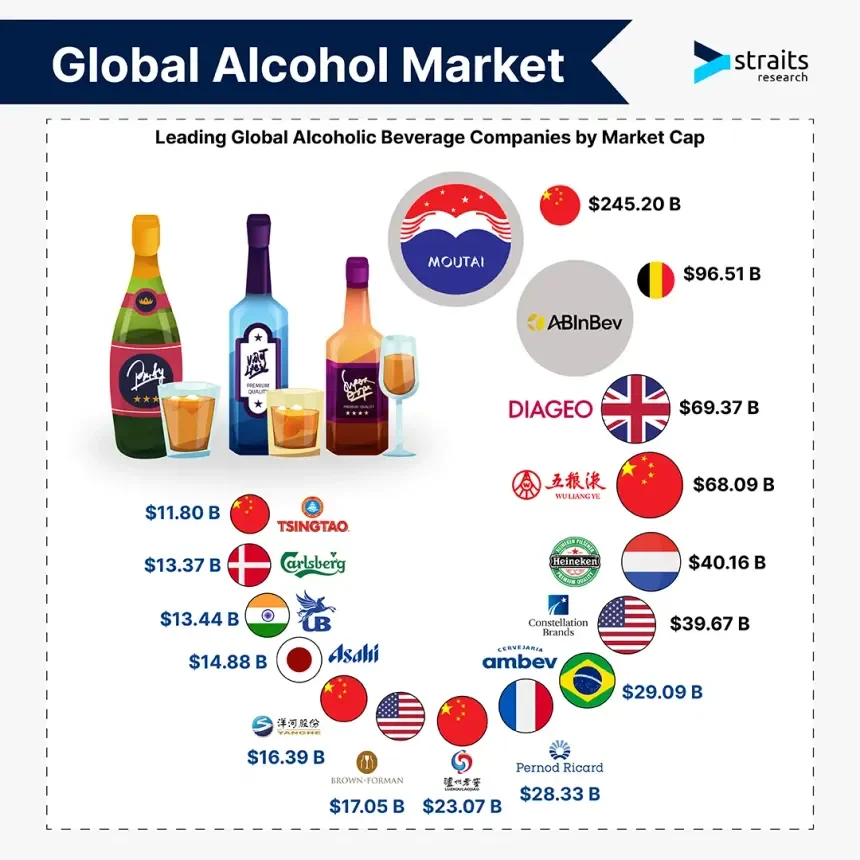
Top Producers: The industry is dominated by a small number of massive companies. Kweichow Moutai Co Ltd (China) is the largest by market capitalization, followed by Anheuser-Busch InBev (Belgium/Netherlands) and Wuliangye Yibin (China).
Brand Portfolios: Large conglomerates hold hundreds of brands each; for instance, Bacardi Limited produces more than 200 brands of alcohol, while Heineken reaches markets with over 300 brands.
Consumption Data: Approximately 446 billion liters of beer, wine, and spirits are consumed annually worldwide, with beer accounting for nearly 400 billion liters of that total.
There is no specific global count for the total number of wine and alcohol brands in the world as of 2026, as the market is highly fragmented with thousands of small producers. However, the industry is dominated by a few large companies that control significant market share through extensive brand portfolios.
Global Market Context: The global alcoholic drinks market was valued at approximately $1.61 trillion to $2.72 trillion in 2025/2026, with an estimated 100,000 wineries worldwide supporting a wine industry worth $300 billion.
Top Producers: E. & J. Gallo Winery is the largest wine producer globally, producing over 90 million cases in 2026. The Wine Group follows with 43 million cases, while Accolade Wines delivers 27 million cases.
Brand Portfolios: Major companies hold dozens of brands; for example, Campari Group owns over 50 premium spirits brands, and The Wine Group produces wines across 125 brands.
Regional Data: In the U.S., there were 11,107 wineries at the start of 2026, while Canada had 831 wineries. The distribution bottleneck means that while many brands exist, 20% of wines generate 80% of sales.
“The beverage alcohol industry is undergoing significant changes as it looks ahead to 2026, with new consumer behaviors and market trends shaping its future. According to recent research from IWSR, six main drivers are influencing the direction of the industry: the evolving relationship Gen Z has with alcohol, the impact of affordability on consumer choices, the growing importance of global travel retail (GTR), the rise of ready-to-drink (RTD) beverages, broad-based growth in developing markets, and a renewed focus on innovation. Gen Z, those born between the late 1990s and early 2010s, is not abandoning alcohol, but is redefining how and when they consume it. Data from IWSR’s Bevtrac consumer research in September 2025 shows that Gen Z’s participation in alcohol consumption is stable compared to a year ago and higher than in 2023. However, this group is becoming more selective, with the average number of beverage categories consumed per occasion dropping from 2.8 to 1.8 over two years. While Gen Z remains the most likely age group to take temporary breaks from drinking—53% reported abstaining for a period compared to 39% of all drinkers—this rate has declined since last year, especially in countries like Australia and the UK.” ~ according to www.vinetur.com.
In this case affordability of many choices created the layer that prevented illegal sales in regions with the most varieties, yet, in my personal opinion, this also leads to overconsumption. Because if more varieties made less affordable to the most population that consumes it, person will think twice whither to buy a beer or the food for dinner, in case of the less sever addiction and lack of funds. Mid to high range pricing keep balance of value and quality. In simpler terms if you only have $10.00 left in your pocket, going home and want to relax, but also need to eat, you would skip the beer, hopefully, if it costs $29.99 instead of $9.99 for 12 cans.
Now why is it even matter? Brain Composition Breakdown.
Gray Matter: Contains about 80% water.
White Matter: Being lipid-rich, it contains about 70% water.
Overall Average: Most scientific estimates place the total brain water content between 73% and 75%.
Impact of Hydration. Even mild dehydration can impair cognitive function. A reduction in body water by just 2% has been linked to significant impairments in attention, executive function, and memory. Because the brain does not store water, maintaining consistent hydration is essential for optimal brain performance and structure. And so, if you drink 12 cans of been every night, what happens to your brain and cognitive function? 12 cans of this beer contain a total of 7.2 fluid ounces (approximately 213 milliliters) of pure alcohol. The liver typically metabolizes alcohol at a rate of about one standard drink per hour, meaning consuming 12 cans of regular beer would take approximately 12 hours for the body to fully process the alcohol. But if you never stop drinking and do it every day you basically never remove alcohol from the system, period. Your brain is basically preserved in alcohol, like in the museum of medicine ...
Historical alcohol consumption has experienced distinct, massive spikes driven by economic shifts, cultural norms, and policy changes. In the United States, the most extreme spike occurred in the early 19th century, particularly peaking around 1830, where per capita consumption reached approximately 7 gallons of ethanol per year. This era, often called the "Great Alcoholic Binge," saw Americans consuming roughly 1.7 bottles of standard 80-proof liquor per person, per week, a level nearly triple that of the late 20th century.
This surge was fueled by the settlement of the Midwest corn belt, which made whiskey cheaper and more profitable to produce and transport than grain or other beverages. By the 1820s, whiskey sold for twenty-five cents a gallon, undercutting beer, wine, coffee, and milk. Consumption was ubiquitous across social classes, with many adults consuming alcohol with every meal and even children drinking sweetened portions of adult beverages.
A second significant spike occurred in the 1970s and 1980s, where U.S. per capita consumption reached its modern historical high of over 10 liters of ethanol per person per year. Although this was high, it remained well below the early 19th-century peak. Consumption dropped sharply during Prohibition (1920–1933), falling to an estimated 30% of pre-Prohibition levels in the early years, before recovering and rising again in the post-war decades.
Marketing alcohol, and I actually do it myself on my corporate travel site www.skiandbeachhaus.com/touragencies, is part of the problem. But I only market it via online without ANY external marketing, not even social media. By the way, ironically my biological last name was Kharytonov(a). Original idea to market alcohol to the lower to middle class, was meant to improve the depressive moods after wars, in promoting upper class luxury lifestyle to slaves and boyars. Which meant that celebratory beings where supposed to promote light alcohol use in luxurious setting with the dinner or during some happy event. During certain periods, society had leaders interested in well educated slaves, rather then just a workers and granted them freedom with titles and their own lands. However, as the story goes, lesser capacity beings began turning this into competition of achieving higher class without appropriate training, bypassing all of the social laws, so to speak. To put it simply? They killed the people who had offered them opportunity into the better life. They decided they just entitled for everything they had. History keeps repeating itself, over, and over, and over …
Is it even possible to fix it? Yes, remove extreme competition and desire to extreme profits, rather then appropriate living income profit and you have well sustained balanced business. Create alcohol collectives, instead of thriving to become one and only alcohol producer on the market. But most societies are not ready for this. We are driven to become me, my and my only... And so addiction goes into hands of people, who produce and sell it, but barely care about final customer’s use circumstances. I am not saying we should not drink at all, I am saying: people, for the most part, are taken psychological advantage by the industry. Just saying “drink responsibly” on the label is kind of silly, we all know it. Law has to do something else.
Final Feng Shui Period analysis perspective:
The concept of distinct "Feng Shui Periods" (San Yuan Jiu Yun), each lasting 20 years, did not exist in 1794. This system was developed much later, with the modern 180-year cycle of Flying Star Feng Shui beginning in 1864. In 1794, during the Qing Dynasty, Feng Shui practices were primarily based on Form School (landscape assessment) and early Compass School techniques, but they did not utilize the numbered Period system (Period 1, Period 2, etc.) that became standard in the 20th century. The first recognized period in the modern Flying Star calendar is Period 1 (1864–1883).
This time period in Russian History would have been period of Catherine the Great up to Nicholas I (1762- 1855).
The period from 1794 to 1864 in American history spans the establishment of the federal government, the expansion of slavery, the Civil War, and the beginning of Reconstruction.
If we consider current count and Feng Shui Periods and count back, this timeline would cover Feng Shui Periods: 6, 7, 8, 9 and 1.
Prohibition Period between 1920 and 1933 falls into Period 1.
1794: Begins on January 31, 1794, marking the Wood Tiger year (Period 6).
1864: Begins on Monday, February 8, 1864, marking the Wood Rat year (Period 1).
Number 6 is Metal, Number 1 is Water. Both support each other within the generation cycle.
Combination of flying stars 1 - 6 | 6 - 1 means: Good for money, but produces Migraine Headaches.
Responsible for body parts: 6 - head, lungs large intestine; 1 - ears, blood, kidney, bladder, bones, sex organs.
Metal (6) produces Water (1)
Positive:
Occupants involved in military or physical/manual work experience wealth and career progression.
The 1,6 sector brings career advancements to occupants, when combined with monthly or yearly star 2.
This sector also increases wealth, when combined with monthly or yearly star 8.
With the main door in this location, travel opportunities arise when the monthly or yearly 9 star arrives in the 1,6 sector.
Negative:
Properties with the Fan Yin and Fu Yin patterns, which have a 1,6 combination with a door located in this sector tend to experience loss of wealth.