

Video: “5 Taras Sanskrit Dharani & Mantras with Full Offering Puja: Ends Suffering” (Official Music Video) © 3Gems (@3GemsBand), a Buddha Weekly project (@BuddhaWeekly), published on YouTube. Embedded with YouTube's player under the Standard YouTube Licence. All rights remain with the creator; Marinapolis claims no ownership.
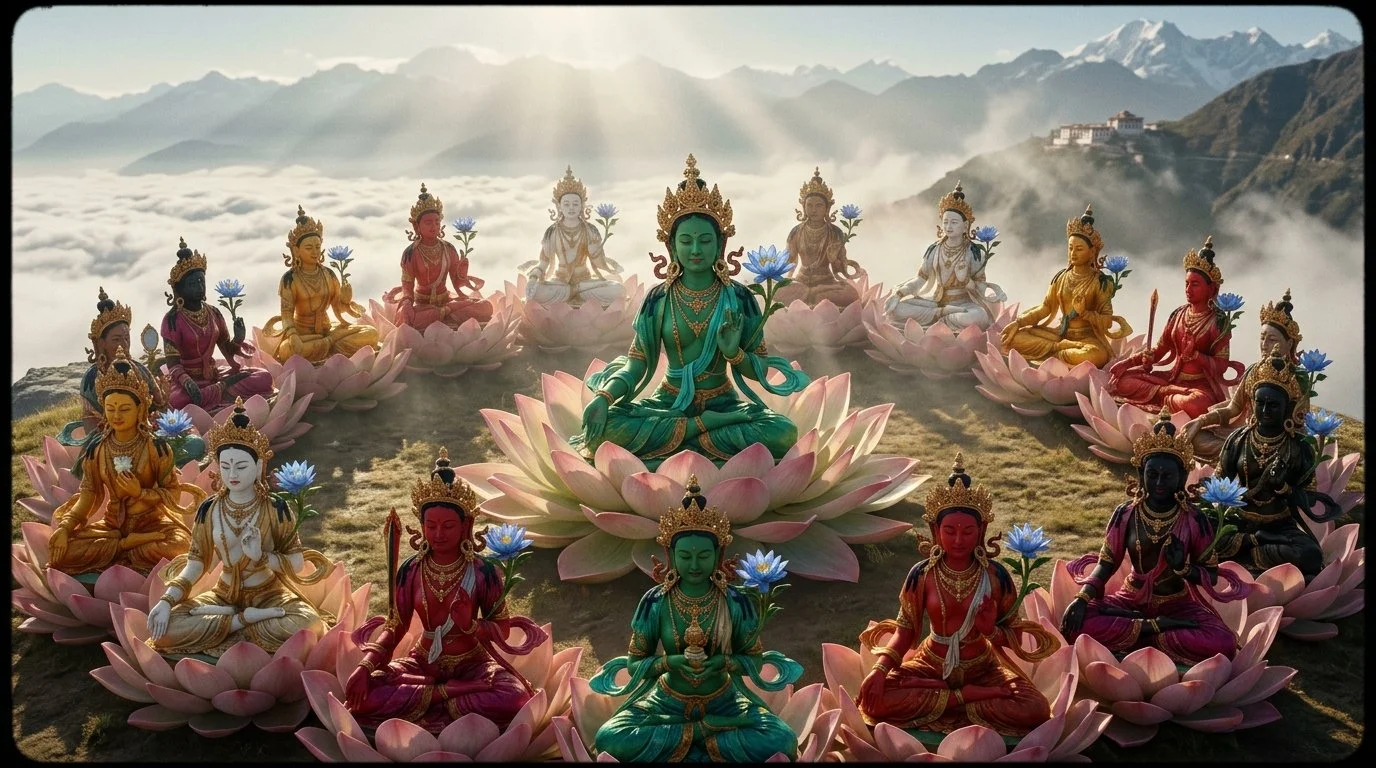
The Twenty-One Tārās
Tārā — “she who liberates” — is the swift, compassionate mother of all the buddhas. In Tibetan tradition she appears in twenty-one forms, each a different colour holding a different emblem, each embodying one facet of her enlightened activity: pacifying, enriching, magnetizing and protecting.
The forms below follow the visualization in Adornment of Lord Nāgārjuna's Wisdom Mind: The Fourfold Maṇḍala Offering to Tārā by Jigme Lingpa, in which Green Tārā sits at the centre surrounded by twenty Tārās on the petals of a lotus.
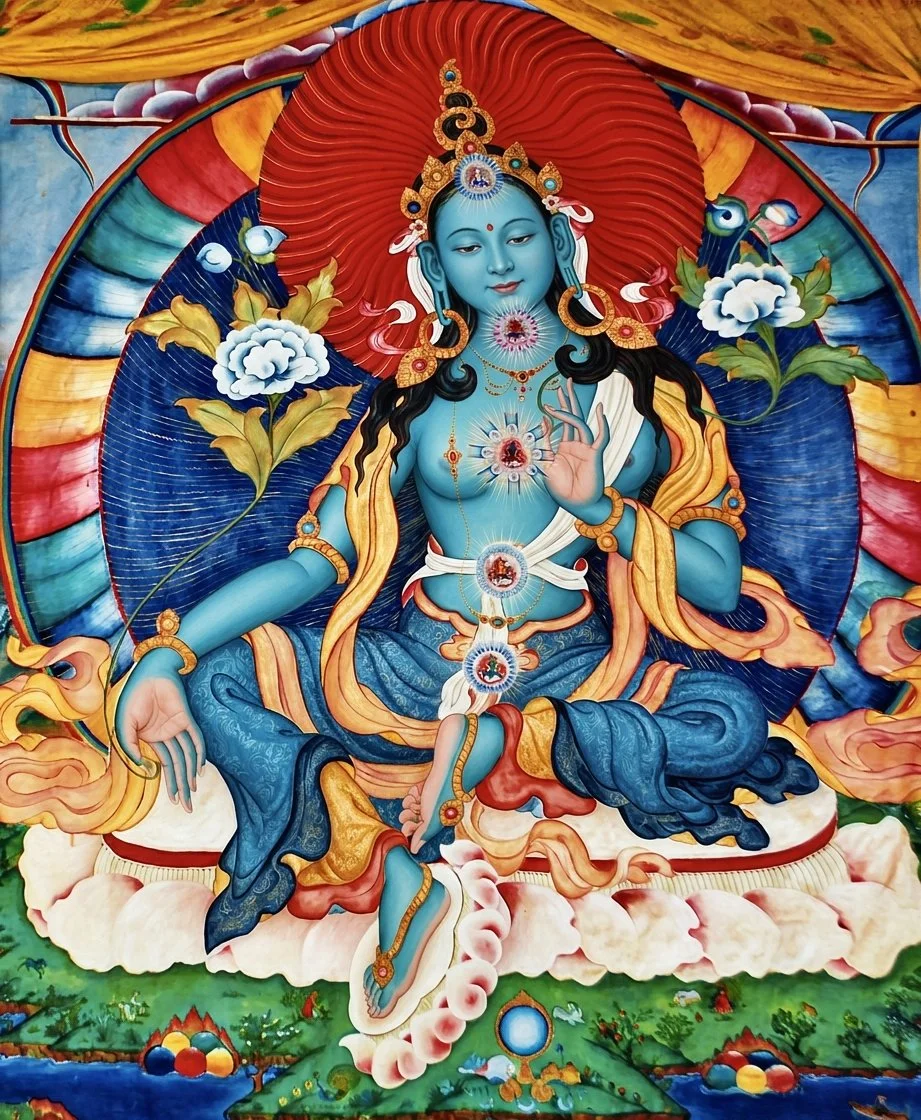
Green Tārā
From the green seed syllable taṃ arises noble Tārā, a beautiful sixteen-year-old goddess, green in colour. She sits with her left leg drawn in and her right leg extended, ready to rise at once and come to the aid of anyone who calls on her.
Her right hand rests at her knee in the gesture of supreme generosity; her left hand at her heart holds the stem of a blue utpala lotus that blossoms beside her ear. She is adorned with jewels and silks, her hair swept up, a moon-like halo shining behind her, and Buddha Amitābha, Boundless Light, crowns her head.
Green is the colour of activity: Green Tārā unites all of the other twenty forms and accomplishes every one of their functions. She is especially known as the protector from the eight great fears.
The Twenty-One Tārās
Green Tārā and her twenty emanations, each with her own colour and emblem. White and peaceful forms pacify, yellow forms enrich, red forms magnetize and dark forms protect.
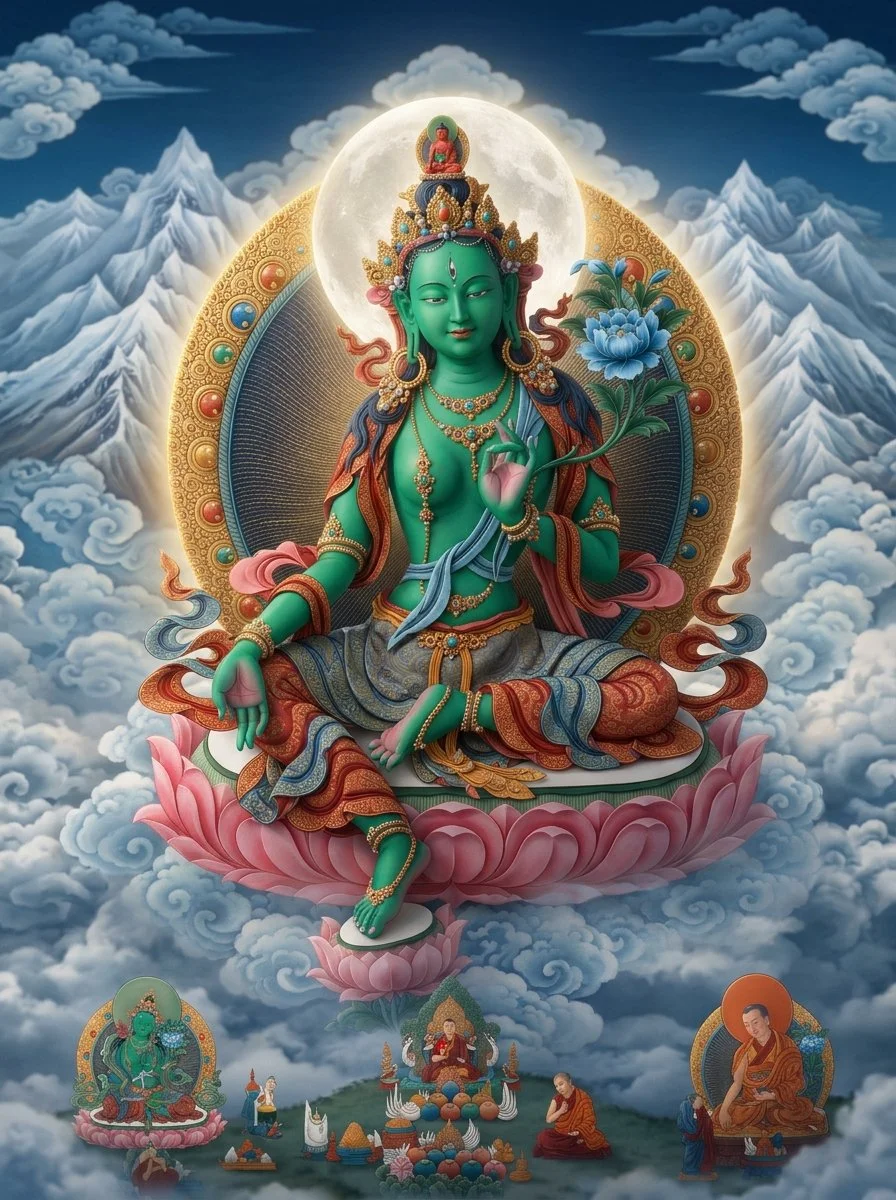
Green Tārā
From the green seed syllable taṃ arises noble Tārā, a beautiful sixteen-year-old goddess, green in colour. She sits with her left leg drawn in and her right leg extended, ready to rise at once and come to the aid of anyone who calls on her.
Her right hand rests at her knee in the gesture of supreme generosity; her left hand at her heart holds the stem of a blue utpala lotus that blossoms beside her ear. She is adorned with jewels and silks, her hair swept up, a moon-like halo shining behind her, and Buddha Amitābha, Boundless Light, crowns her head.
Green is the colour of activity: Green Tārā unites all of the other twenty forms and accomplishes every one of their functions. She is especially known as the protector from the eight great fears.
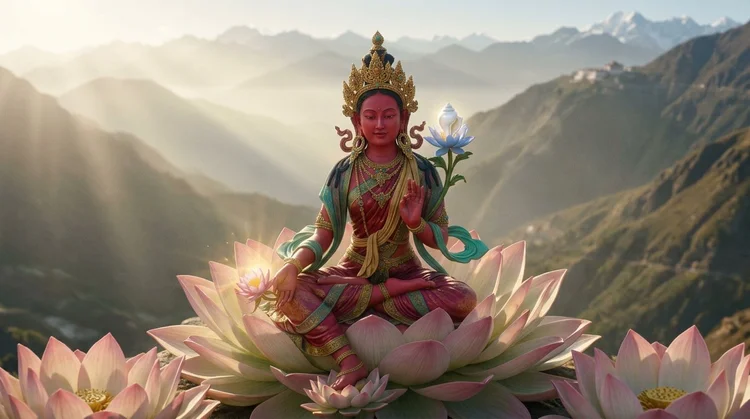
Swift Heroine
First of the twenty-one, she is the Tārā of the opening line of the famous Praises, “Homage, Tārā, swift heroine.” Her right-spiralling white conch proclaims the Dharma in every direction, and her swiftness is her compassion: she answers the moment she is called, cutting through obstacles before they take hold.
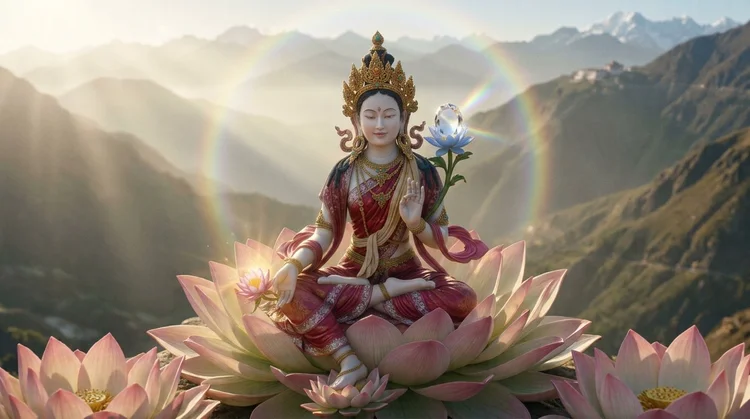
Melodious Goddess
Luminous as the autumn moon, she is Tārā as the goddess of song, speech and learning. Her crystal mirror reflects all things exactly as they are without clinging to any image, and the seed syllable hrīṃ on its surface awakens clear insight, eloquence and a mind that sees through confusion.
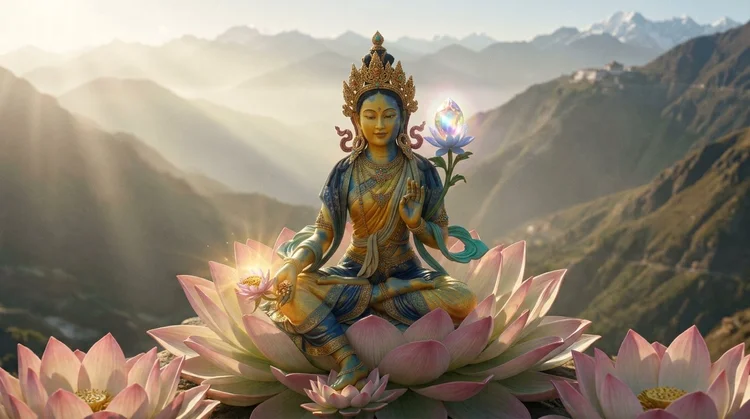
Supreme Treasure of Goodness
Her colour blends the gold of increase with the blue of depth. She holds the wish-fulfilling jewel, the source of every merit and good fortune, and is invoked to make goodness grow — generosity that never runs dry and the conditions in which positive deeds can flourish.
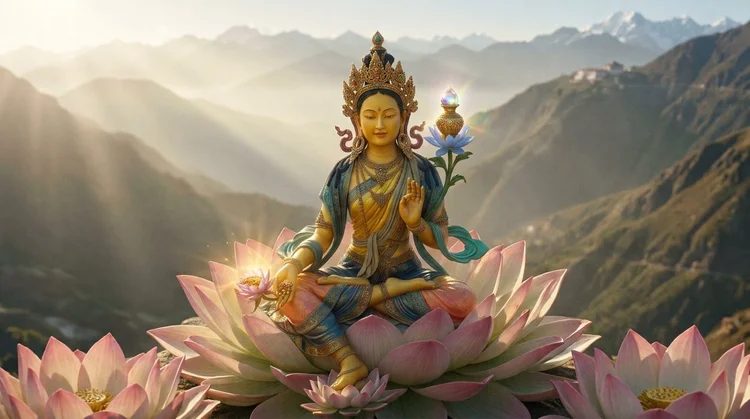
Victorious Topknot
Named after the crown protuberance of the Buddha, she embodies the victorious wisdom that sits at the summit of enlightenment. The long-life vase she holds brims with the nectar of immortality, and she is called upon for longevity, health and the strength to complete one's path.
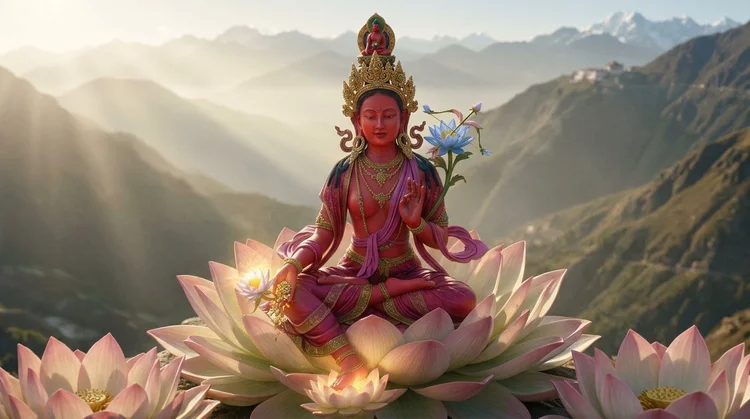
Kurukullā
The red Tārā of magnetizing activity. With her bow and arrow she draws to herself whatever is beneficial — people, circumstances and blessings — and binds them to the good. Her power is the gentle, irresistible attraction of love rather than force.
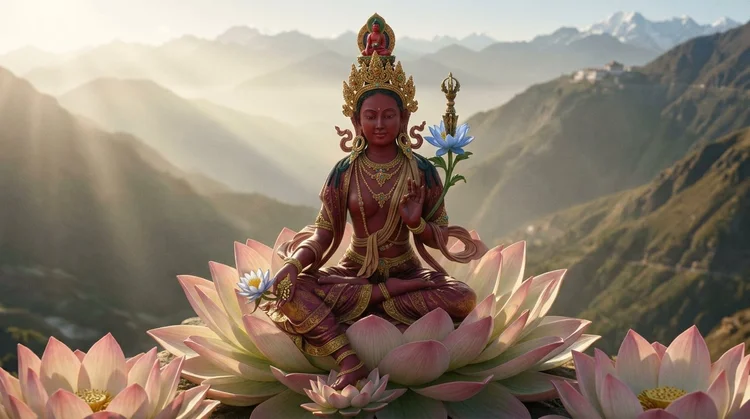
Terrifying Goddess
Dark red and formidable, she frightens away the forces that harm beings. Her three-sided ritual dagger pins down hatred, attachment and ignorance at their root, transforming the energy of fear into unshakeable protection for those who rely on her.
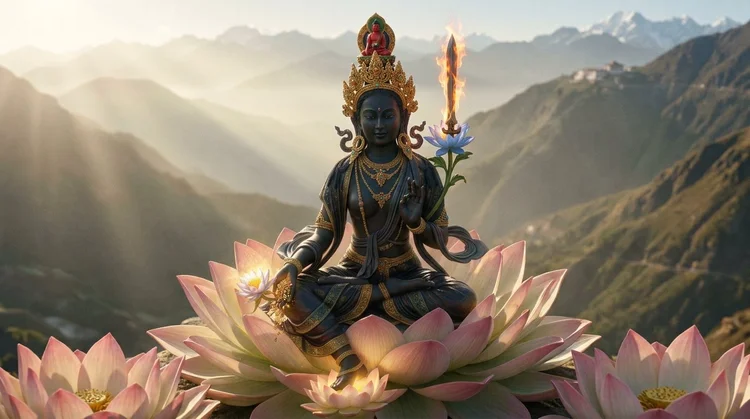
Invincible
Black as the depth of space and impossible to overcome, she wields the flaming sword that slices through ignorance and every hostile influence. Her frown is not anger but the uncompromising clarity that refuses to let suffering continue.
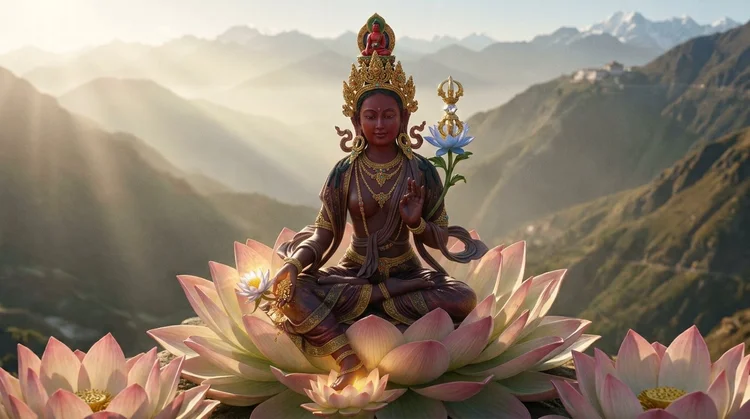
Undefeated
Holding the indestructible vajra, she represents a strength that no adversary can defeat. She protects against hostile forces, harmful magic and negative influences, standing firm like the diamond that cuts all and is cut by nothing.
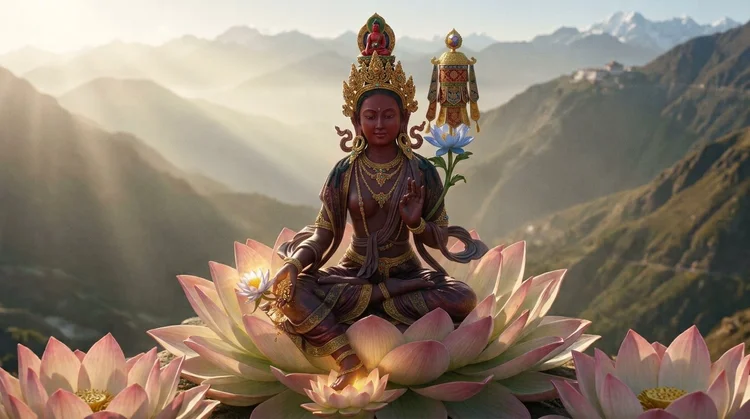
Conqueror of the Three Worlds
Her victory banner flies over the three realms of existence, signalling the triumph of wisdom over the obscuring emotions. She brings mastery and authority used for others' benefit, and the confidence to overcome every inner and outer obstacle.
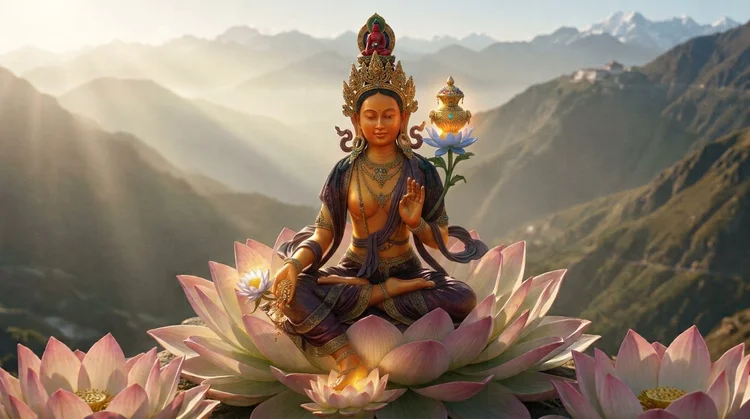
Jewel Treasure
Holding an inexhaustible treasure vase, she bestows prosperity and the material support needed for practice and for helping others. Her wealth is offered to dispel poverty, both of resources and of spirit.
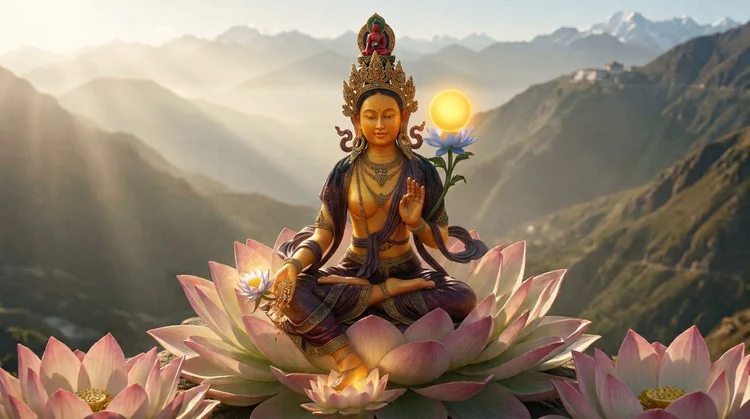
Auspicious Accomplisher
The endless knot she holds has no beginning and no end, symbolising the interdependence of all things and the unbroken union of wisdom and compassion. She brings auspiciousness, harmony and the successful completion of every worthy undertaking.
Army that Defeats Enemies
With a vajra whose prongs open outward like flames, she disperses hostile forces and the armies of inner enemies — anger, jealousy and pride. She is invoked for protection in conflict and in times of danger.
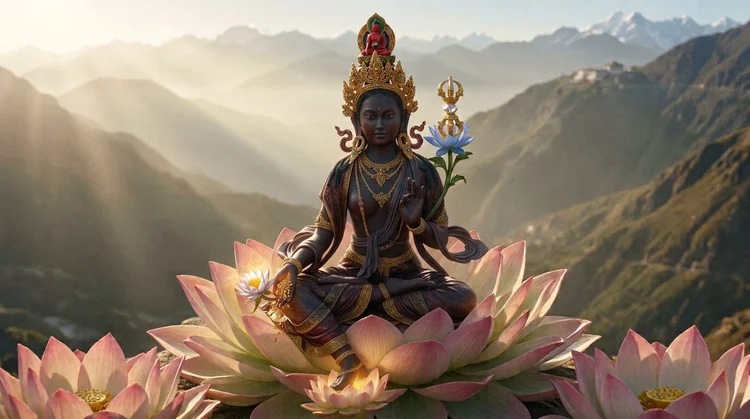
Wrathful Frown
Her brow is knit in fierce compassion, and her wooden club strikes down obstructing spirits and harmful influences. She embodies the wrathful activity that protects the vulnerable and clears the path when gentler means are not enough.
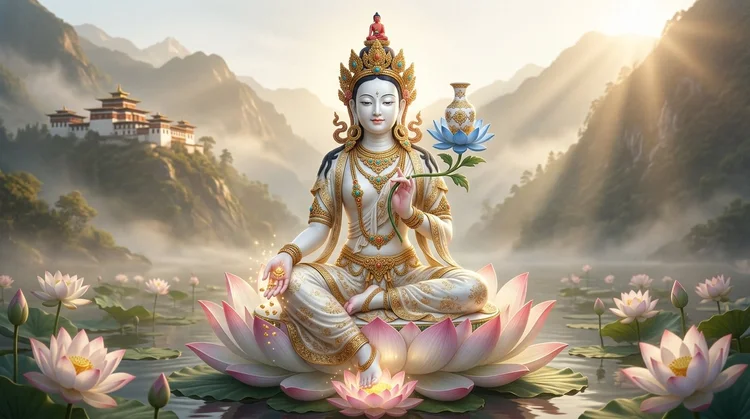
Utmost Pacification
Bright and cool, she pours from her pitcher the nectar that washes away negative karma and obscurations. Her activity is pacification: soothing illness, calming disturbance and bringing the mind to deep, purified peace.
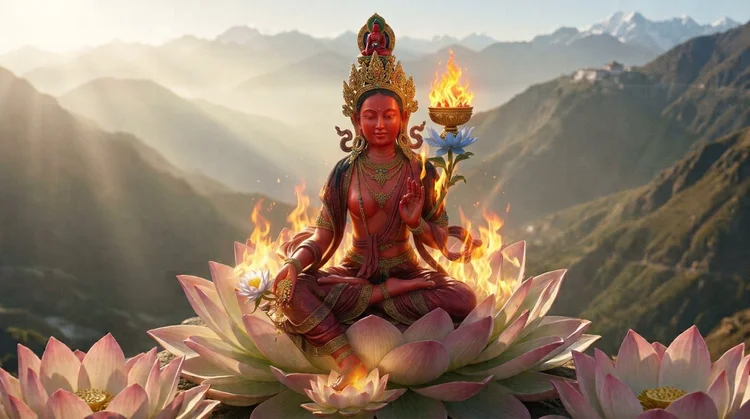
Blazing Light
Surrounded by blazing light, she holds the crossed vajra, a symbol of stability and of activity extending in all four directions. She burns away obstacles and dissolves hostile intentions, establishing firm and stable protection.
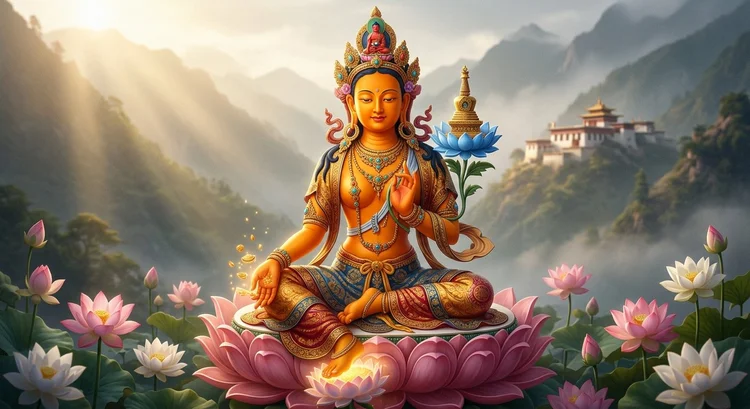
Boundlessly Overwhelming
Saffron-coloured like the robes of the ordained, she holds a stupa, the image of the Buddha's enlightened mind. Her presence is vast and overwhelming, outshining every negativity, and she is linked with the protection and flourishing of the teachings.
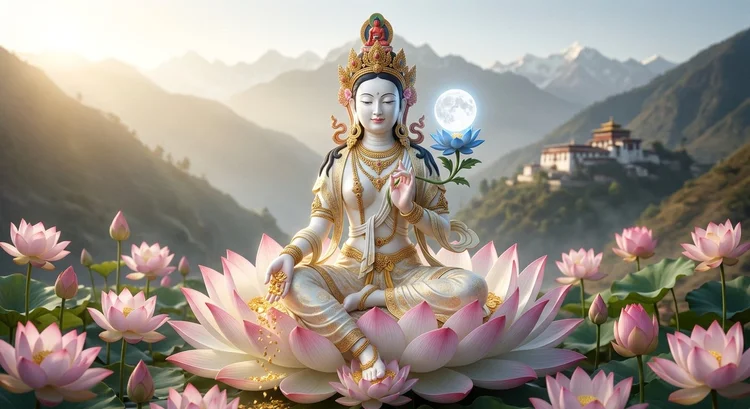
Peacock Goddess
Like the peacock said to transform poison into the brilliance of its feathers, she transforms harmful substances and afflictions into wisdom. Her full moon cools the fever of the poisons and brings healing clarity.
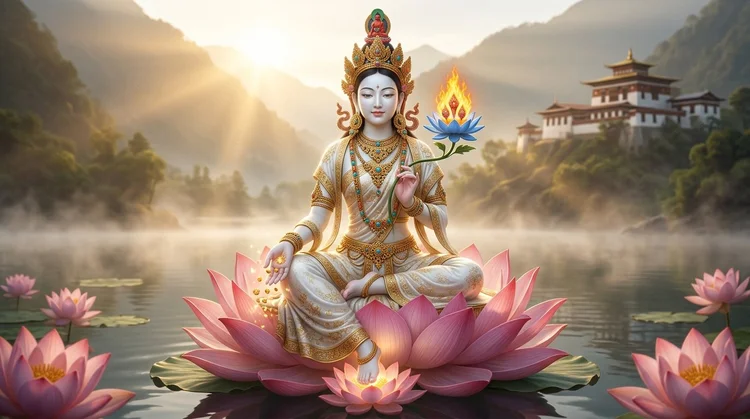
Undefeated Victory
Her white parasol shelters beings from the heat of suffering and from harm of every kind. She grants protection that cannot be overcome, especially from contagion, sickness and the turmoil of conflict.
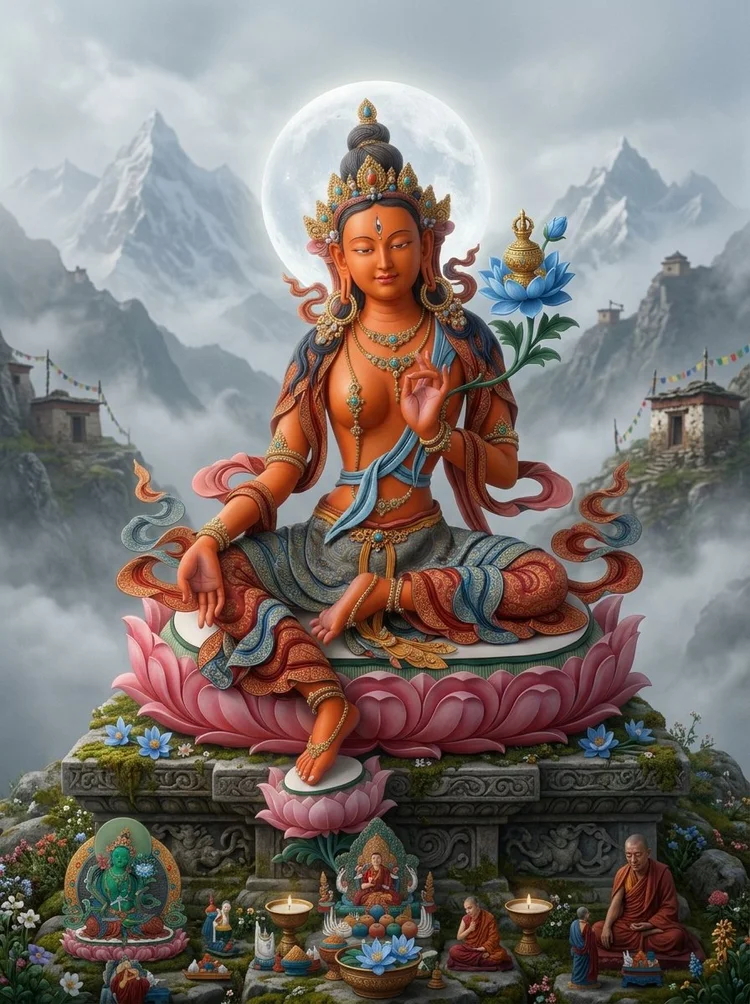
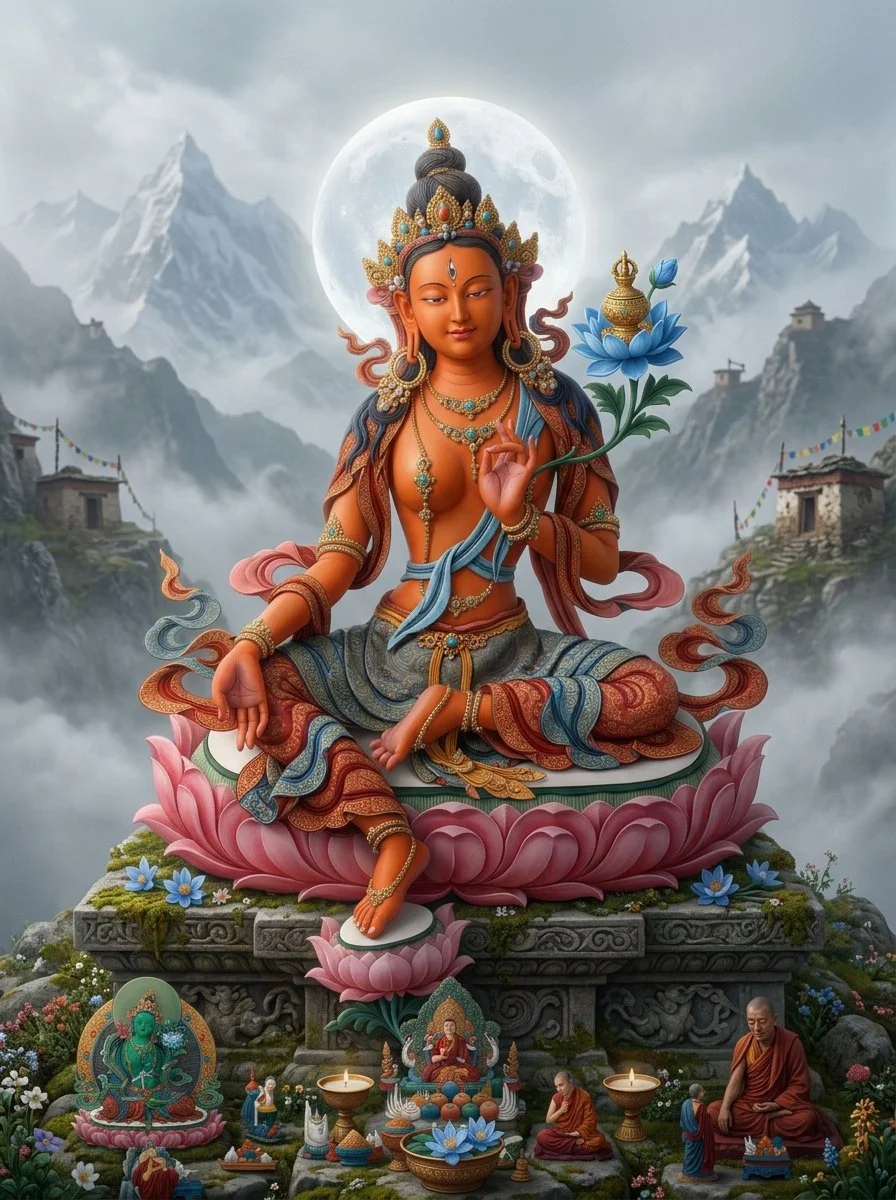
Goddess of Hermitages
She dwells in mountain retreats and watches over those who practise in solitude. The vessel she holds provides sustenance, and she protects meditators from disturbance, illness and the hardships of retreat.
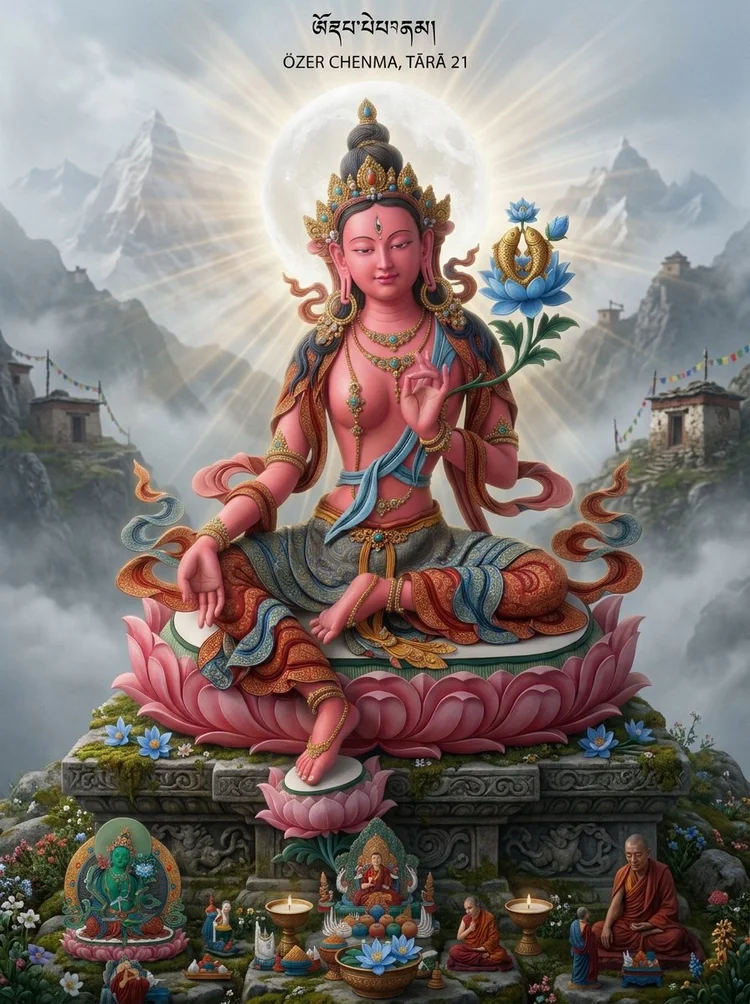
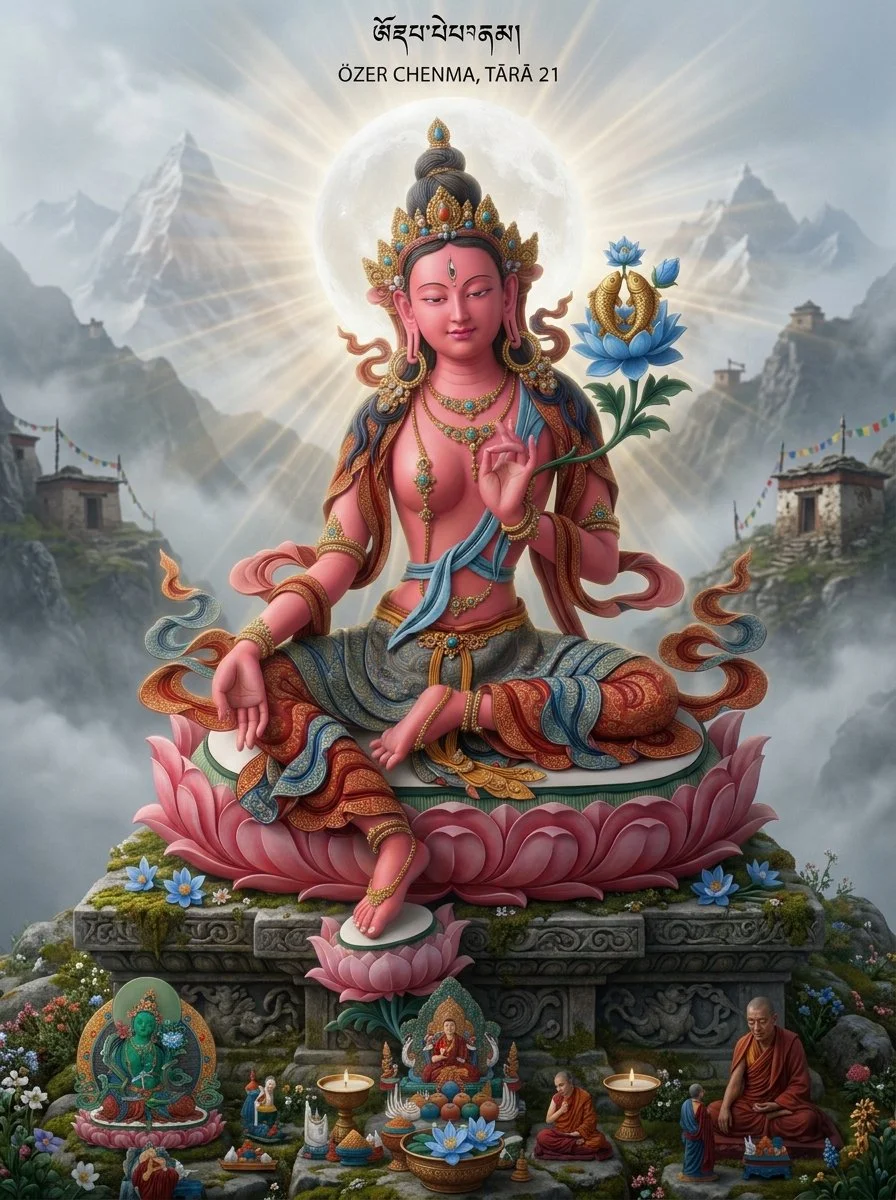
Light Rays
Pink and radiant, she shines rays of light that bring blessing and joy. The golden fish, swimming fearlessly in the ocean of existence, symbolises freedom from fear and the auspicious abundance she bestows on those who turn to her.
Tārā Mantras
All of Tārā's activity mantras grow from a single ten-syllable root mantra. To focus on a particular purpose, a few syllables are added to the root mantra just before svāhā.
Traditionally visualized as a garland of light circling the green syllable taṃ at Tārā's heart. Ten thousand recitations is considered ideal; otherwise one thousand. Tārā's name-mantra, simply tāre, may also be repeated on its own.
Augment the mind of awakening
Adds bodhicitta, the heartfelt wish to awaken for the benefit of all beings. Recited to strengthen that intention, which in turn makes every positive action more powerful.
Protection from the eight great fears
Tārā is renowned as the protector from the eight great dangers — lions, elephants, fire, snakes, thieves, imprisonment, water and malevolent spirits — which also stand for pride, ignorance, anger, envy, wrong views, greed, attachment and doubt.
Increase sublime insight
Prajñā is discerning wisdom. This form invites clarity, understanding and the insight that sees the true nature of things.
Foster goodness
Mahāpuṇya means great merit. Recited to increase goodness and the positive conditions that support practice and wellbeing.
Longevity
Āyur means life. This mantra asks Tārā to grant long life and the vitality to use it meaningfully.
Gain power
Invokes Kurukullā, Tārā's red magnetizing form, to draw together beneficial influence and the ability to help others.
Avert obstructing forces
Sarva-vighna means all obstacles. Recited to clear away the forces that obstruct health, practice and success.
In battle and adversity
For protection when facing conflict, opposition or hostile circumstances.
Avoid slander
Daha and paca — “burn” and “cook” — consume harmful speech and gossip directed against oneself.
Take control of the world
Loka-vaśaṃ kuru, “bring the world under influence”: recited to gain the influence needed to benefit others.
Alleviate poverty
Vasu is wealth and puṣṭi is increase. Recited to relieve hardship and bring prosperity.
Increase wealth, luck and rainfall
Maṅgala-śrī means auspicious glory. Invoked for good fortune, abundance and timely rains for the land.
End disputes
Vajra-jvala is the blazing vajra and rakṣa means “protect.” Recited to settle quarrels and restore harmony.
Avert armies
For protection from invading or hostile forces.
Reverse wrongdoing
Sarva-pāpaṃ gate gate — “all negativity, gone, gone.” Recited to purify harmful actions and their effects.
Ward off curses
For protection from curses, ill-wishing and harmful intentions sent by others.
Defend against thieves, bandits and wild animals
For safety on journeys and protection from robbery and dangerous animals.
Protection from all poisons
Sarva-viṣa means all poisons — outer toxins and the inner poisons of the afflictive emotions alike.
Avoid conflict and bad dreams
Rakṣa rakṣa māṃ — “protect, protect me.” Recited for peaceful days and restful nights.
Avert plague
Invoked against epidemics and contagious illness, for oneself and the community.
Ransom for a sick person's longevity
Recited in rituals that ransom the life-force of someone who is ill, invoking Mārīcī, goddess of the dawn, to restore their vitality.
Lineage Thangkas
Tārā above, the lineage masters, offerings and practitioners below. Tap an image to enlarge.
The Fourfold Maṇḍala Offering to Tārā
Illustrated reading edition of Jigme Lingpa’s liturgy, with phonetics, English, mantras and notes (PDF, 68 pages).
Tārā Puja Morning Prayer
Video: “Tara Puja (སྒྲོལ་མ།) Morning Prayer” © Himalayan Buddhist Monks, published on YouTube on 10 July 2026. Embedded with YouTube’s player under the Standard YouTube Licence. All rights remain with the creator; Marinapolis claims no ownership.
The Path of the Fourfold Maṇḍala
Jigme Lingpa's offering to Tārā is far more than a ritual of requests. Step by step it trains the mind in trust, love, generosity, pure perception, honesty and joy. Here is the whole practice, stage by stage, with a reflection you can carry into daily life from each one.
Preparation
Preparing the shrine
A clean, pleasing space is arranged around an image of Tārā, with a maṇḍala placed at each of her four corners and offerings of water, flowers, incense, light and food on each side. Four white tormas and a vase for cleansing are set nearby.
Part One · Relying on the Three Jewels
Refuge and the awakened mind
The practitioner takes refuge in the Buddha, the teachings and the spiritual community, and resolves that every act of generosity and goodness will be dedicated to the awakening of all beings.
The four boundless wishes
Love — may all beings be happy. Compassion — may they be free from suffering. Joy — may they never be parted from true happiness. Equanimity — may they rest free from clinging to friends and aversion to enemies.
Taking the vow of awakened heroes
Following the example of the buddhas of the past, the practitioner vows to cultivate the awakened mind and train in its conduct — then rejoices that this human life has become truly meaningful.
Consecrating the place
The ground is imagined as pure everywhere — free of stones and sharp edges, level as the palm of a hand, smooth as polished beryl.
Blessing the offerings
With mantra and concentration, the offerings arranged on the shrine are multiplied into vast clouds of offering, filling space like the offerings of the bodhisattva Samantabhadra.
Remembering the qualities of the Three Jewels
The practitioner recalls the qualities of the Buddha — fully awakened, knowing the world, the unsurpassed guide — of the teachings, pure and liberating, and of the community, worthy of respect.
Inviting the deities and asking them to stay
Buddhas and bodhisattvas are invited from their pure realms and requested to remain for as long as the practice continues.
The cleansing ritual
In an imagined bathhouse of crystal floors, jewelled columns and a pearl canopy, the practitioner bathes the buddhas and bodhisattvas with scented water, dries them with soft cloth, and offers fine robes, ornaments and fragrant ointments.
The seven-part service
Homage, offering, admitting faults, rejoicing in goodness, requesting the teachings, asking the enlightened ones to remain, and dedicating the merit — the seven branches drawn from the Flower Ornament Sūtra.
Praise
Verses of praise honour the Buddha as the compassionate, all-knowing teacher, the Dharma as serenity itself, and the Saṅgha as the true field of qualities.
The extensive maṇḍala offering
The entire universe is offered: a golden ground ringed by iron mountains, Mount Meru at the centre, the four continents and their subcontinents, the sun and moon, and every precious and delightful thing.
Stating one's wishes
A long dedication prays that the teachings endure, that temples and communities flourish, that the sick be healed, those in cold find warmth, those in heat find coolness, animals be free from fear, and all beings find ceaseless happiness.
The Seven Branches
Recited in both parts of the practice, the seven-part service gathers goodness and wisdom. Traditionally, each branch is also an antidote to a particular habit of mind.
Homage
Bowing to all the buddhas
Offering
Offering real and imagined gifts
Admission
Acknowledging harmful actions
Rejoicing
Delighting in others' goodness
Request
Asking the buddhas to teach
Beseeching
Asking them not to pass away
Dedication
Sharing all merit with every being
Part Two · Relying on Noble Tārā
Visualizing Tārā
From emptiness arise a lotus and a moon; upon them the green syllable taṃ becomes a blue lotus, and its light transforms into Tārā, surrounded by her twenty emanations on the lotus petals.
Invitation and empowerment
Tārā is invited from her pure land of Potala. The buddhas bestow empowerment with a nectar-filled vase; the water fills the deities' bodies and overflows to crown each Tārā with the buddha of her family.
Sealing with the lotus gesture
With a gesture representing a blossoming blue lotus, the practitioner touches forehead, throat, heart and both shoulders while reciting Tārā's mantra, sealing the union of the visualized and wisdom deities.
Service, cleansing, offerings and the maṇḍala
The seven-part service, the bathing ritual, offerings and the maṇḍala of the universe are now offered specifically to Tārā and her retinue.
Praise for protection from the eight fears
A praise honours Tārā, born from a tear on the face of Supreme Compassion, as the one who swiftly shelters beings from the eight great fears — each of which is revealed as an inner affliction.
Homage with the Twenty-One Praises
The famous Praises to the Twenty-One Tārās, beginning “Homage, Tārā, swift heroine,” are recited twice.
Mantra recitation
The mantra garland circles the green taṃ at Tārā's heart. The root mantra is recited, then the activity mantra for the chosen purpose, followed by the matching verse of the Twenty-One Praises one hundred times.
Supplication
After reciting her name-mantra tāre three hundred times, the practitioner asks Tārā to purify obscurations, remove obstacles and illness, pacify the eight fears, let the awakened mind grow like the waxing moon, and lead all beings to rebirth in the pure land of Amitābha.
The Eight Fears Within
In the praise of Part Two, each of the eight outer dangers Tārā protects from is revealed as one of the mind's afflictions. Her protection is ultimately freedom from these.
Lion
The lion's claws are pride — even pride in our own ethics and goodness.
Wild elephant
The foolish elephant is mindless conformity, trampling clarity.
Fire
The flames of deeply ingrained anger that fuel inner infernos.
Snakes
Jealousy that sees others' good fortune as an enemy.
Thieves
The belief in a solid, lasting self, which robs us of liberation.
Chains
Craving and habit that bind reality into the narrow frame of 'me' and 'mine'.
Floods
The turbulent rapids of desire that sweep the mind away.
Ogres
Entangling doubts that paralyse the heart and keep us from acting.
Repeating the Offering
Three rounds of offering
The whole sequence of maṇḍala offering and approaching the deity is performed three times. In the second round the Praises to the Twenty-One Tārās are recited three times; in the third, seven times. When the ritual is repeated, the conclusion is done only once, at the very end.
The Conclusion
Offering the tormas
Four tormas are offered: to noble Tārā, to the protectors of the teachings, to the local spirits who guard the area, and to the beings of the six realms as guests worthy of compassion.
Admitting faults
Anything missing, excessive, forgotten or done imperfectly in the ritual is acknowledged, and patience is asked for; the hundred-syllable mantra of Vajrasattva is recited three times.
Asking the deities to remain
The deities are asked to remain inseparable from their images for as long as saṃsāra lasts, granting health, longevity and prosperity; those without a physical representation are asked to depart and return again.
Dedicating the goodness
All the goodness created is dedicated so that every being may complete the twofold accumulation of merit and wisdom and attain the two bodies of enlightenment.
Wishes of auspiciousness
The practice closes with verses celebrating the three supreme auspicious fortunes of this world: the Buddha with eyes like lotus petals, his sublime teachings, and the harmonious spiritual community.
A Ten-Minute Daily Practice
- Arrive. Light a candle or offer a glass of water before an image of Tārā, and sit quietly for three breaths.
- Refuge and intention. Recall what you trust, and dedicate the session to the wellbeing of everyone you will meet today.
- The four wishes. Silently wish happiness, freedom from suffering, lasting joy and equanimity — first for one person, then for all.
- Offer the world. Imagine offering everything beautiful you have seen recently — a sunrise, a kind word, a garden — to Tārā.
- Visualize and recite. Picture Green Tārā before you and recite oṃ tāre tuttāre ture svāhā 21 or 108 times.
- Name your fear. Notice which of the eight inner fears is strongest today, and ask Tārā for help with that one specifically.
- Dedicate. Share whatever goodness came from the practice with all beings, and end with a moment of gladness.